


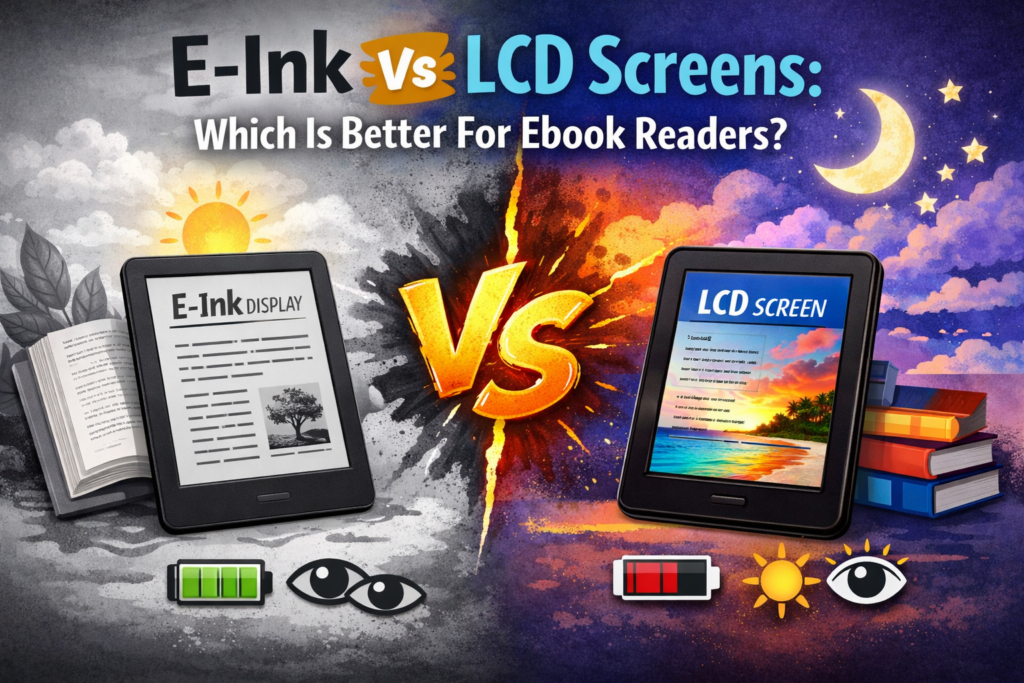

When shopping for an e-book reader, the screen type is one of the most important factors.
When shopping for an e-book reader, the screen type is one of the most important factors to consider. E-Ink and LCD have totally different looks and feels, and they definitely impact your reading experience in unique ways. If you want to know which one might be better for you, I’ll break it all down here: how they work, what they’re good at, some of the drawbacks, and which type fits certain readers best.
I’ve spent years bouncing between ereaders, so I’ve noticed those little day-to-day differences that affect real-world use. Let’s now have a look at the details that actually matter when you’re picking out your next ebook device.
Understanding E-Ink and LCD Screens
What Is an E-Ink Screen?
E-Ink (short for “electronic ink” or “electronic paper”) is a display technology made to mimic the look of ink on real paper. Most dedicated ereaders, like Kindles or Kobos, use E-Ink. When you look at an E-Ink screen, it’s not backlit in the same way as a tablet or phone. Instead, it uses tiny black and white particles that shuffle around to display text and images, providing a paper-like reading experience.
Who’s E-Ink Best For?
- Avid readers who power through books for hours at a time
- Anyone sensitive to eyestrain or screen fatigue
- People who want a more “booklike” vibe and easy reading outdoors
E-Ink Pros & Cons
Pros:
- Easy on the eyes (feels a lot like paper)
- Huge battery life—often weeks per charge
- No glare, so you can read outside
Cons:
- Usually just black and white (though colour E-Ink is starting to show up)
- Slower to refresh; flipping pages can feel a little less snappy
- Not great for fast animations or video content
What Is an LCD Screen?
LCD (liquid crystal display) is the same basic kind of screen that you find on tablets, phones, and most laptops. These screens are bright and colourful, and they can be much more responsive when it comes to fast swipes and page turns. You’ll see LCD screens used in multipurpose devices like iPads, and in some colour ebook readers as well.
Who’s LCD Best For?
- People who read comics, magazines, or textbooks brimming with images
- Anyone who likes to use their device for browsing, videos, and apps too
- Folks who mostly read indoors and want more colour or a fast interface
LCD Pros & Cons
Pros:
- Bright, full colour (great for image-rich books and comics)
- Super responsive when flipping around or using apps
- Works great as an all-in-one device
Cons:
- Battery goes fast; you’ll probably be charging daily
- It can cause a lot more eye strain, especially after long sessions
- Glare can make it tough to read outside in direct sunlight

Key Feature Comparisons
- Display Comfort and Eye Strain
Why It Matters: Most of us read on these devices for long stretches, and tired eyes are the worst.
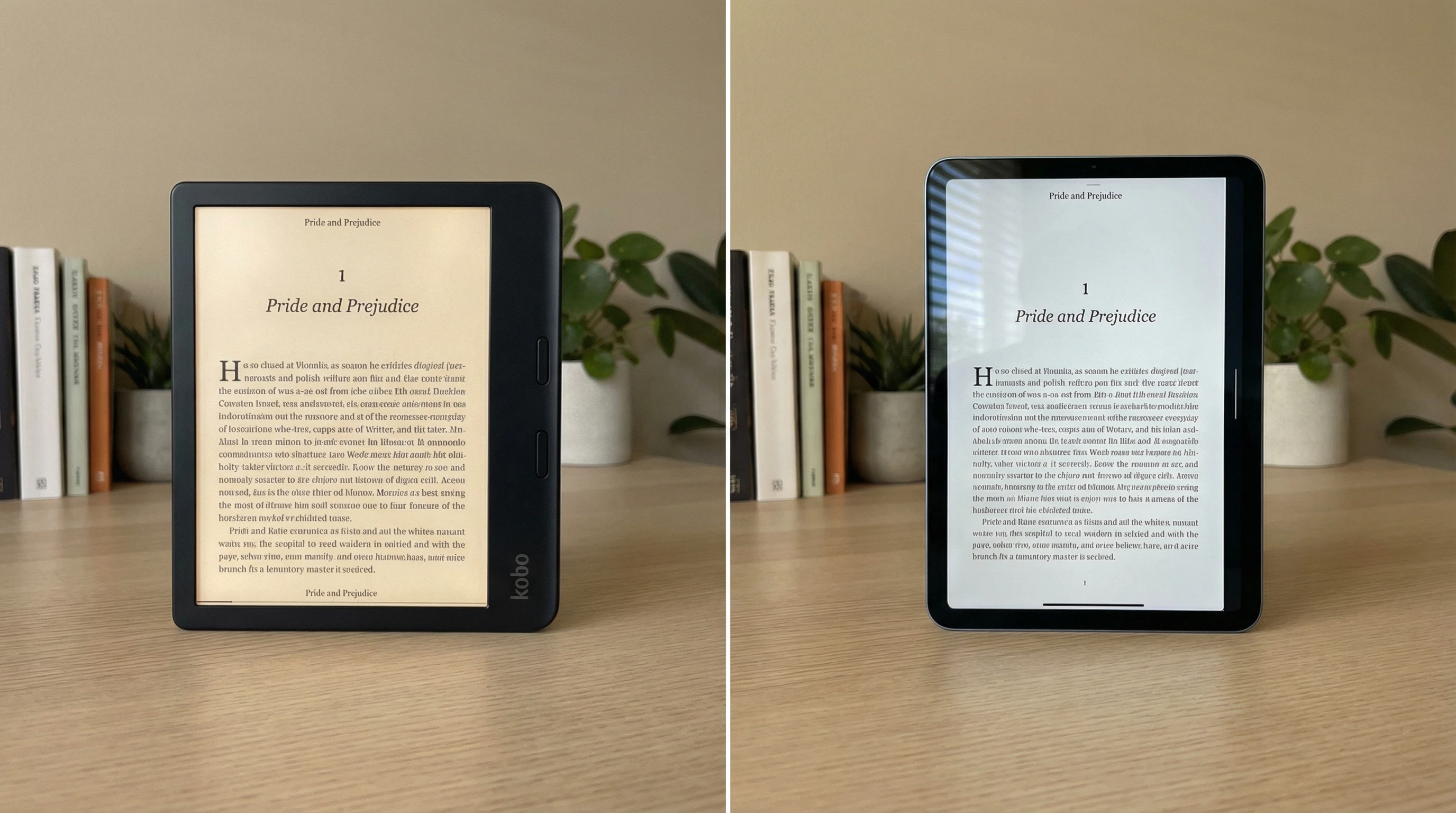
E-Ink: Looks a lot like paper, so reading for hours feels pretty natural. There’s little to no eye strain, even at night (especially with adjustable frontlights on newer models).
LCD: The bright backlight can make your eyes tired or dry if you’re reading for ages. The blue light can also throw off your sleep at night unless you use night mode.
Pretty much every reader I know who settled on E-Ink says they switched because their eyes felt better. The comfort of reading on E-Ink often makes a huge difference for anyone who spends hours getting lost in a novel.
- Outdoor and Sunlight Reading
Why It Matters: Many readers love to use their devices at the beach, in the park, or anywhere outdoors.
E-Ink: No glare at all; you can read under direct sunlight with no squinting or tilting. It’s perfect for outdoor reading, even on the brightest days.
LCD: Glare can be pretty frustrating in sunlight. Even with brightness turned up, direct sunlight often makes LCD screens tough to see. That’s why tablets aren’t always ideal at the poolside or on a picnic blanket.
- Battery Life
Why It Matters: Few things are more annoying than your reader dying in the middle of a chapter.
E-Ink: E-Ink screens only use power when flipping pages, so battery life is impressive—often two to four weeks between charges, depending on how much you read.
LCD: Bright screens and background processes drain power pretty quickly. Most need recharging every day or two, especially if you also use apps or audio features.
- Versatility and Extra Features
Why It Matters: Not all ebook readers are just for reading. Some are meant for more.
E-Ink: These devices are built for one thing: reading books. You won’t get games, videos, or a load of smart features. Some E-Ink readers support simple note-taking or web browsing, but it’s usually basic.
LCD: Tablets and hybrid readers are more than just ebook readers. You get colour, sound, apps, web browsing, streaming, and more. If you want a single device for reading plus everything else (from Netflix to email), LCD is tough to beat.
- Display Quality for Images and Magazines
E-Ink: Monochrome E-Ink is just okay for images, charts, or anything with colour. Colour E-Ink exists, but it’s still lower resolution, and colours are a little muted compared to LCD.
LCD: High Colour makes comics, kids’ books, cookbooks, and graphic novels really stand out. If images and vibrant illustrations are a big deal for you, LCD is the clear winner.
User Feedback and Real-World Experience
- E-Ink: Most users say they love the simplicity and comfort, though some wish for more features, faster refresh speeds, or better colour display.
- LCD: People like having everything in one place—email, games, streaming, and books. But a lot of readers complain about eye fatigue and charging up much more often.
Overall Reputation: Both screen types have loyal followings. If reading is your priority, most people eventually lean toward E-Ink. If you love flexibility and want an entertainment hub, LCD tablets are hard to beat.
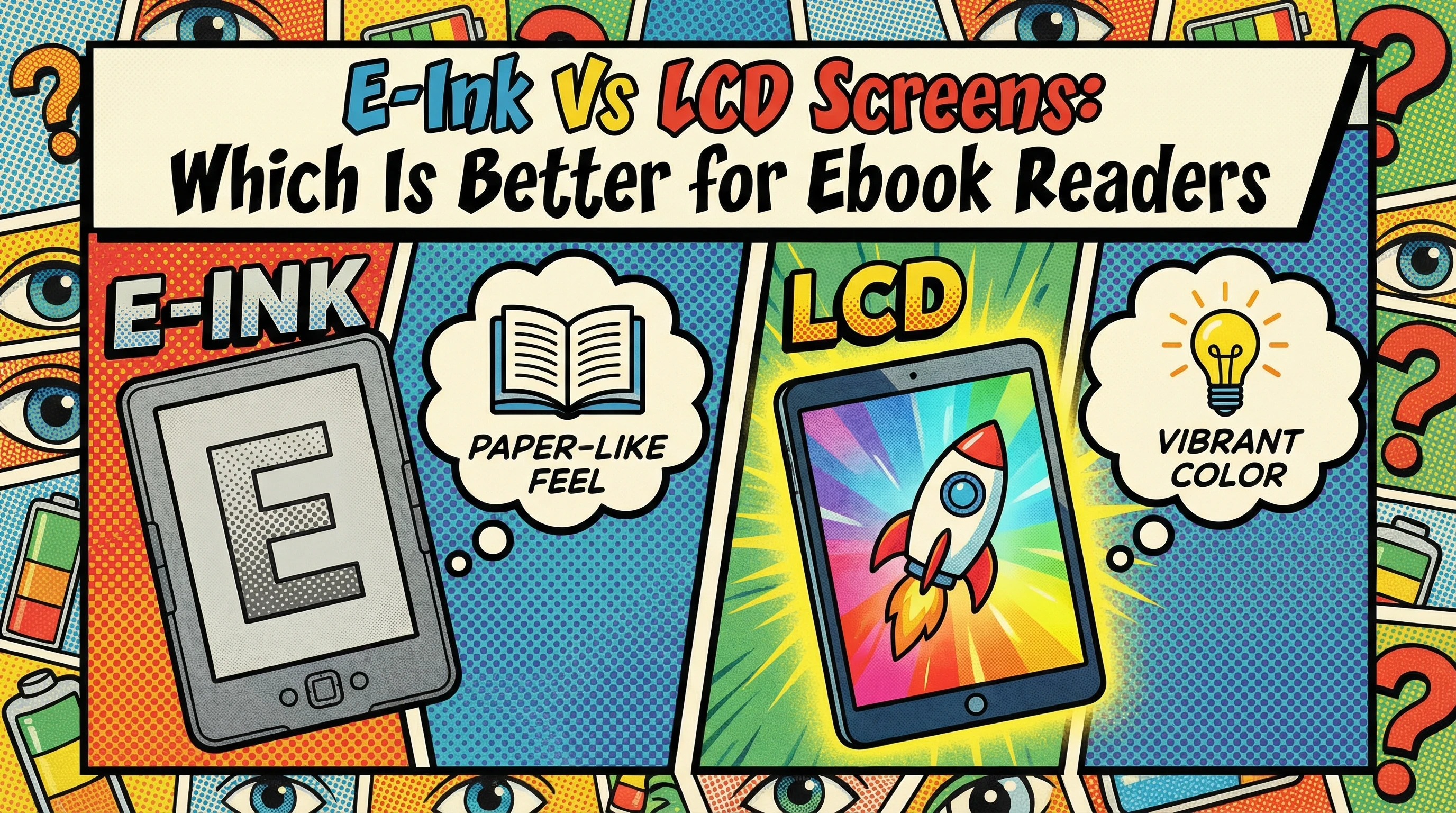

So, Which Screen Is Right for You?
There’s a pretty even split when you look at what people want from their reading devices.
Go with E-Ink if you:
- Plan to read for hours at a time without eye fatigue
- Want something light, easy to carry, and simple to use
- Often read outside or while travelling, and don’t want to worry about frequent charging
Pick LCD if you:
- Want colour, images, and an all-around entertainment device
- Use your tablet for reading plus streaming, browsing, and apps
- Rarely read outside and don’t mind charging more often
Wrapping Up
Picking the right ebook reader comes down to how you plan to use it and what feels best for your eyes. For me, E-Ink devices win out for those long reading sessions—especially before bed or at the beach—because they just feel easy on the eyes and last forever on a charge. If I need colour for magazines or want a gadget that handles everything, I’ll go for a tablet with an LCD screen. Each style has its upsides and points to keep in mind, so think about what matters most to you before making your pick. Happy reading!